after (fleeting retention)
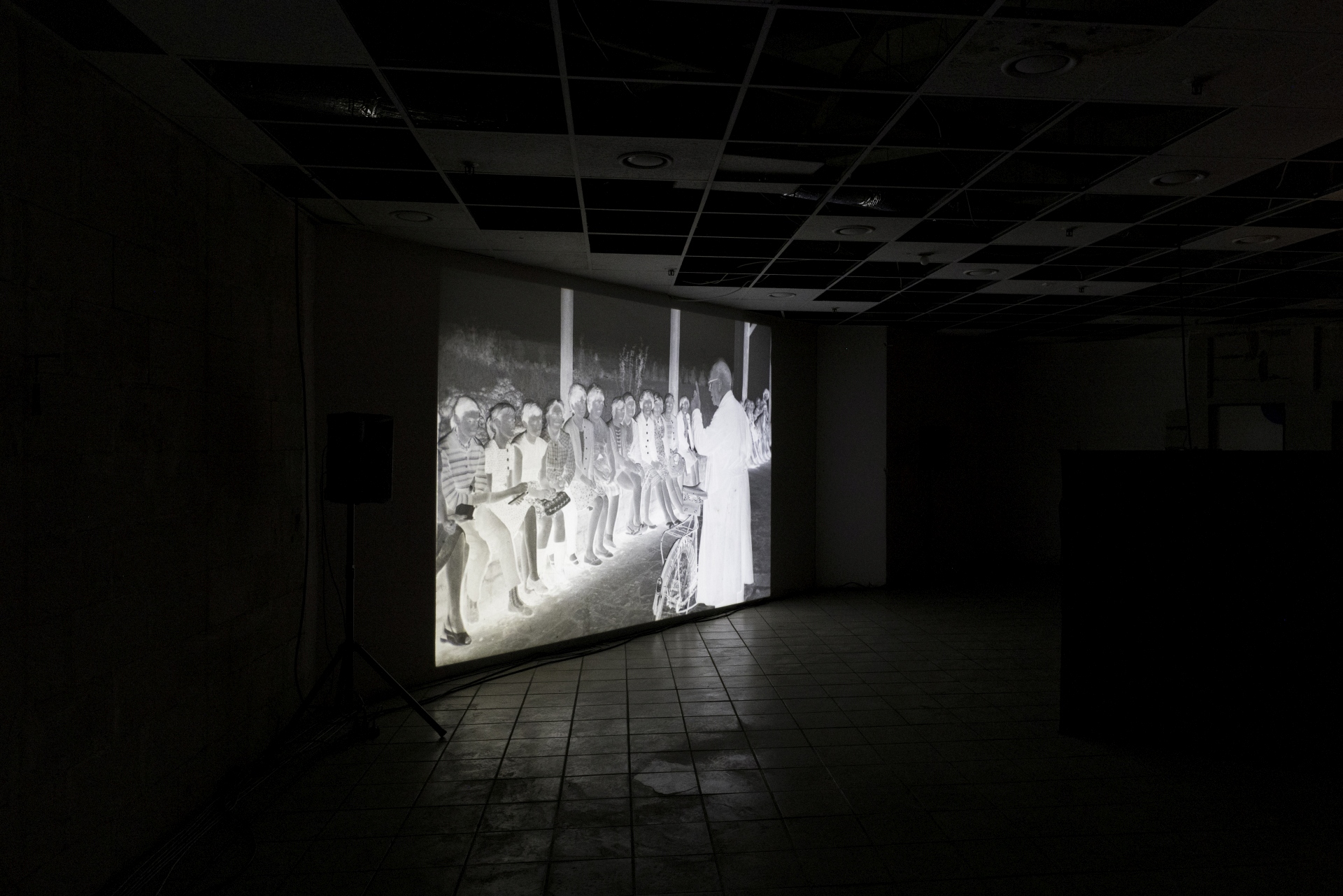
after (fleeting retention) ist eine immersive audiovisuelle Installation über Nachbilder, instabile Erinnerung und die Fragilität visueller Interpretation. Ein modifizierter Kodak-Carousel-Projektor mit einem intensiven LED-Blitzsystem macht fotografische Archivnegative für kurze Momente sichtbar, synchronisiert mit einer generativen Klangumgebung. Die Arbeit fragmentiert die ursprünglichen Erzählungen der Bilder und verwandelt sie in kurze visuelle Ereignisse, die erscheinen, als visuelle Spuren kurz nachwirken und wieder verschwinden.
Die Besucher:innen betreten einen dunklen, visuell reduzierten Raum, in dem zwischen den Blitzereignissen nur schwache Konturen erkennbar bleiben. Innerhalb dieser sensorischen Unsicherheit unterbrechen helle, synchronisierte Bild- und Klangimpulse immer wieder die Dunkelheit. Die Restspuren der Negative bleiben für einen Moment auf der Netzhaut präsent und regen jede Person dazu an, eigene Verbindungen zwischen Bildfragmenten, Klang, Erinnerung und persönlicher Interpretation herzustellen. Weitere Dokumentation, Bilder und Video sind auf der Projektseite verfügbar: slavaromanov.art/2025/afterfleetingretention-de.
.jpg)
Technischer Rider
Zentrale Komponenten
Die Installation umfasst ein Projektions- und Wiedergabesystem. Zu den zentralen Komponenten gehören:
- modifizierter Kodak-Carousel-Diaprojektor mit Weitwinkelobjektiv
- ultrahelle LED-Lichtquelle mit Kühlkörper
- mikrocontrollerbasiertes System für Blitz- und Diawechsel
- Archiv-Diakarussell mit fotografischen Negativen
- kompakter PC mit generativer Audiosoftware
- Audiointerface
Weitere Installationselemente sind:
- lokales Stereo-Lautsprechersystem
- Projektorständer oder abgestimmte Montagelösung
- schwaches rotes Orientierungslicht
.JPG)
Dimensionen / Laufzeit / Skalierbarkeit
- Ungefährer Installations-Footprint: ca. 2 x 2 m für den geschützten Projektions- und Steuerungsaufbau
- Der Projektionsabstand sollte ein großformatiges Bild ermöglichen, idealerweise annähernd raumhoch, wenn der Raum es zulässt
- Klang und Blitze laufen kontinuierlich während der Öffnungszeiten
- Blitzereignisse sind kurz und variabel, typischerweise ca. 0,1 bis 2 Sekunden
- Der Diawechsel erfolgt während des Betriebs unvorhersehbar
Räumliche Anforderungen
- Empfohlene minimale Raumgröße: ca. 5 x 5 m
- Ein größerer geschlossener Raum wird dringend empfohlen, idealerweise ca. 8 x 5 m oder vergleichbar
- Vollständige Verdunkelung ist erforderlich
- Ein Doppelvorhang oder eine vergleichbare Lichtschleuse am Eingang wird empfohlen
- Der mittlere bis hohe Schallpegel erfordert akustische Trennung von benachbarten Arbeiten
- Ein stabiler Boden mit möglichst wenigen reflektierenden Flächen ist erforderlich
- Niedrige Luftfeuchtigkeit, geringe Staubbelastung und allgemein saubere Bedingungen sind für einen zuverlässigen Betrieb erforderlich
Technische Anforderungen Seitens Der Institution
- 220 V / 50 Hz / ca. 3 A, Schuko
- Dunkle Mehrfachsteckdose mit mindestens 6 Anschlüssen
- Maximale Entfernung zur Stromquelle: ca. 4 m
- Schwarzer Molton oder vergleichbares Verdunkelungsmaterial für Fenster, Türen und Streulicht
- Vorhänge oder mehrlagige Drapierungen zur Lichtkontrolle am Eingang
- Ein oder zwei schwache rote LED-Leuchten oder rot gefilterte Lampen nahe dem Eingang
- Gaffer Tape oder Kabelbrücken für Kabelmanagement am Boden
- Warnhinweis auf helle Blitze und Dunkelraumbedingungen
- Zwei Lautsprecher, mindestens ca. 100 W pro Stück, passend zur Raumgröße
- Lokale Produktionsunterstützung für eine geschützte Projektorposition senkrecht zur Projektionswand
- Falls der Projektor im Raum stehen muss, ist eine Schutzabsperrung von allen Seiten erforderlich, damit Besucher:innen im Dunkeln nicht in den Projektionsaufbau geraten
- Falls relevant, können zusätzliche lokale Archivnegative vorab besprochen werden
Vom Künstler Bereitgestellte Komponenten
- Kodak-Carousel-Projektor mit 36-mm-Weitwinkelobjektiv
- Modifizierte LED-Lichtquelle mit Kühlkörper
- Mikrocontrollerbasiertes System für Blitz- und Diawechsel
- Archiv-Diakarussell
- Kompakter PC mit generativer Audiosoftware
- Audiointerface
- Projektorständer oder abgestimmte Support-Hardware
- Audio-, USB- und Stromkabel
- Schutzverpackung
Ton
Die Installation verwendet einen generativen Drone-Ambient-Soundtrack mit zufälligen Akzentspitzen, die mit den Blitzereignissen verbunden sind. Die Arbeit sollte idealerweise in einer akustisch getrennten Umgebung präsentiert werden. Schallübertragung zu oder von benachbarten Arbeiten sollte minimiert werden.
.JPG)
Licht
- Der Raum sollte während des Betriebs vollständig dunkel bleiben
- Kein weißes Umgebungslicht sollte sichtbar sein
- Schwaches rotes Orientierungslicht ist akzeptabel und zur Orientierung empfohlen
Sicherheit
- Helle Blitze können photosensible Besucher:innen beeinträchtigen; Warnhinweise am Eingang sind erforderlich
- Der Raum sollte frei von scharfen Hindernissen und unsicheren Wegen in der Dunkelheit bleiben
- Die Besucher:innenzahl im Raum sollte kontrolliert werden, damit der Raum bei Spitzenmomenten nicht überfüllt ist
- Eine klar zugängliche Notfallmöglichkeit zum Einschalten des Raumlichts sollte vorhanden sein
- Projektionsaufbau, Lautsprecher und Steuergeräte müssen außerhalb des direkten Zugriffs der Besucher:innen bleiben
- Kabel müssen abgeklebt oder anderweitig geschützt werden
- Das LED-Modul benötigt stabile Belüftung und Wärmemanagement
- Regelmäßige Aufsicht durch das Personal der Institution wird während der Öffnungszeiten empfohlen; bei hohem Besucheraufkommen oder Gruppen von Kindern sollte eine Aufsichtsperson in der Nähe bleiben
Transport
- 1 Eurobox, ca. 40 x 60 x 40 cm, ca. 15 kg
- 1 Projektorständer oder Stativtasche
- Zusätzlicher Transportkoffer für kompakte Steuerungskomponenten, falls erforderlich
- Alle Geräte sind fragil und müssen mit Sorgfalt behandelt werden
Aufbau / Abbau
- Geschätzte Installationszeit: 1 Arbeitstag
- Die Verdunkelung des Raums sollte nach Möglichkeit vor dem finalen Aufbau vorbereitet sein
- Projektorposition, Fokus, Klangkalibrierung und Blitztests werden vom Künstler durchgeführt
- Lokale Assistenz kann für Verdunkelung, Kabelführung und Aufbau der Schutzabsperrung oder Supportstruktur erforderlich sein
Täglicher Betrieb
- Kompakten PC einschalten, anschließend Audiointerface, dann Lautsprecher
- Der Mikrocontroller läuft nach dem Start automatisch
- Prüfen, ob das Diakarussell korrekt weiterschaltet
- Prüfen, ob kein Dia blockiert ist und das Objektiv sauber bleibt
- Eine tägliche Sichtkontrolle von Kabeln, Ständern, Belüftung und Lautsprecherstatus wird empfohlen
Wartung
- Die Arbeit enthält mechanische, optische und elektronische Komponenten, die gelegentliche Nachjustierung erfordern können
- Diakarussell-Transport, Blitzverhalten, LED-Kühlung und Audiokette sollten regelmäßig überprüft werden
- Bei längeren Ausstellungszeiträumen kann Wartung oder Fehlerbehebung durch den Künstler notwendig werden
- Bei mehrmonatigen Ausstellungen sollten Servicebedingungen und mögliche Reisekosten im Voraus vereinbart werden
- Ersatzkomponenten für LED-bezogene Teile können bei langen Laufzeiten ein zusätzliches Produktionsbudget erfordern
Produktions- / Anpassungshinweis
Für einen langfristigen Ausstellungsbetrieb können zusätzliche Vorbereitung oder Ersatzkomponenten erforderlich sein, insbesondere für das LED-Blitzmodul und andere verschleißanfällige technische Elemente. Entsprechende Produktions- oder Anpassungskosten sollten abhängig von der finalen Ausstellungsdauer und Einrichtung separat besprochen werden.
Versicherungswert
- Kodak-Carousel-Projektor: EUR 500
- 36-mm-Weitwinkelobjektiv: EUR 500
- LED-Modul und Kühlkörper: EUR 400
- Mikrocontroller- und Relaissystem: EUR 1000
- Diakarussell mit Archivnegativen: EUR 2000
- Kompakter PC: EUR 500
- Audiointerface: EUR 200
- Kabel und sonstige Komponenten: EUR 500
- Verpackung: EUR 200
- Gesamtversicherungswert: EUR 5800